At FG Library, we understand that creating an effective library environment is not always about having more space. It is about making thoughtful decisions about the space you already have and understanding how people will use it.
From a quiet reading corner within a public library to a compact study space within a university faculty, a professionally designed library nook can provide an additional environment for reading, learning, collaboration or relaxation. For schools, colleges and universities with larger sites, smaller library spaces can also help bring resources and study opportunities closer to students.
Our approach starts with the people using the space. By understanding their needs, the activities they want to undertake and the wider environment around them, it is possible to create library nooks that feel purposeful rather than simply filling an available corner.
What Makes a Good Professional Library Nook?
We see a library nook as more than a comfortable chair placed beside a bookshelf. A successful nook is a considered part of the wider library environment, designed around a clear purpose and the people who will use it.
This is where thoughtful library design can make a significant difference. The right layout and furniture choices can help a relatively small area perform several functions while still feeling comfortable and welcoming.
Creating Library Nooks Within the Main Library
One of the simplest ways to introduce greater variety into a library is to create smaller, defined environments within the main space.
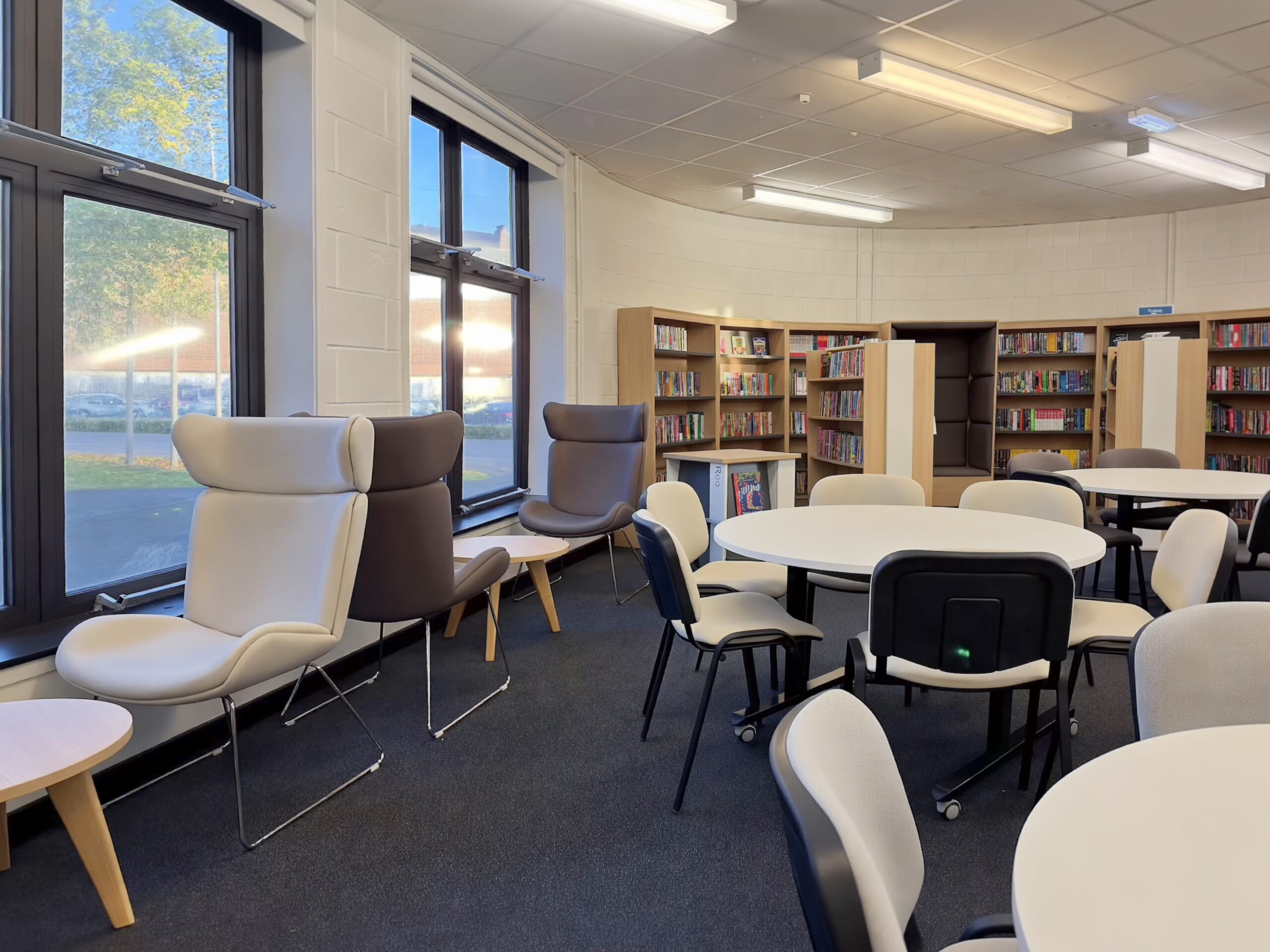
At FG Library, we consider how library shelving, seating and other library furniture can work together to create zones without making the library feel divided. A larger open-plan environment can then accommodate different activities, allowing users to choose an area that suits the way they want to work, read or interact.
Reading and Relaxation Nooks
Reading nooks can provide a more informal alternative to traditional library seating.
Comfortable soft seating, accessible books and a degree of separation from busier areas can create an inviting place to read. In children’s and young people’s libraries, these spaces can also help make reading feel more engaging and personal.
Our soft seating for libraries can form part of these more informal environments, helping create flexible areas for reading, relaxation and interaction.
Quiet Study Spaces
A library needs to accommodate different levels of activity. While some users benefit from collaboration and conversation, others need somewhere to concentrate.
A carefully planned study nook can provide a more focused environment without completely separating the user from the wider library. Seating, acoustics, lighting and positioning can all influence how well the space supports concentration.
Collaborative Learning Areas
Libraries are increasingly places for collaboration as well as individual study. A small nook can provide an informal setting for two or more people to work together, discuss ideas or share resources.
Flexible furniture can help these areas adapt throughout the day. A space might support a small group in one moment and individual study in another.
Library Nooks for Children and Young People
Children and young people can benefit from library environments designed around their scale, interests and ways of learning.
A children’s library nook might combine accessible shelving, comfortable seating and visual features that encourage exploration. For older students, the same principle can be applied to create a more independent environment for reading, study or informal collaboration.
Using Professional Library Nooks to Make Resources More Accessible
The potential of library nooks extends beyond the walls of the main library.
At FG Library, we recognise that schools, colleges and universities can operate across large and sometimes complex sites. Students may spend much of their day in different buildings, departments or learning environments, and travelling to a central library is not always convenient.
Smaller library spaces can provide an opportunity to extend library provision into these areas, bringing selected resources and study facilities closer to where people already learn and work.
Creating Satellite Library Spaces Across Large Campuses
A satellite library nook does not need to replicate the main library. Instead, it can be designed around the needs of its location and the people who will use it.
For example, a university faculty could have a compact library and study area within its own building, providing relevant resources alongside spaces for individual and collaborative work. A large school could introduce smaller reading and study spaces across different buildings, giving students greater access to books and quiet areas without always requiring them to travel to a central library.
These spaces might include shelving, comfortable seating, study furniture, charging facilities and carefully selected resources. The exact combination will depend on the purpose of the space.
FG Library’s experience across educational environments allows us to approach these projects by considering the wider library strategy as well as the individual space. The goal is not to create disconnected mini-libraries, but to develop complementary environments that extend the reach of the main library.
Designing Library Nooks for Different Users
Every library serves a different community, and a successful nook needs to reflect that.
At FG Library, we consider the activities, expectations and practical requirements of each environment when developing library spaces. A primary school reading nook, a university study area and a public library relaxation space may occupy a similar footprint, but they will need very different approaches to layout, furniture and resources.
School Libraries
In schools, library nooks can support reading for pleasure, independent learning and quieter activities within a wider educational environment.
They can also make better use of smaller or overlooked areas. A space beside shelving, within a classroom library or elsewhere in a school building can become a purposeful reading or study destination.
For larger school sites, multiple smaller spaces could complement a central library and make reading resources more accessible across different parts of the school.
College Libraries
College students need environments that can accommodate independent study, collaborative work, reading and informal learning throughout the day.
A library nook within the main college library can introduce greater choice, while satellite spaces elsewhere on campus can provide convenient study environments closer to teaching areas.
University Libraries
Universities often have large campuses, multiple faculties and a diverse student population. A single central library can provide extensive collections and services, but smaller library spaces can complement this provision.
Public Libraries
Public libraries serve diverse communities and often need to accommodate multiple activities within a single building.
Library nooks can help introduce quieter and more personal environments within a busy public space. They might provide somewhere for reading, independent work, informal conversation or relaxation.
Making Every Metre Count with FG Library
Professional library nooks offer a practical way to make more of the space available while giving users greater choice in how they read, learn, study and connect.
Within a main library, a carefully designed nook can create a quiet reading area, focused study space or collaborative environment without requiring additional rooms. Across large school, college and university campuses, smaller library spaces can go further, bringing resources and study opportunities closer to students and staff.
At FG Library, we believe successful library design begins with understanding people and the activities they want to undertake. From that starting point, thoughtful space planning, flexible furniture and carefully considered shelving can help turn even a modest footprint into a valuable part of the wider library environment. For more information, please contact our team today.